Composition:
- Dimensions: width 110 mm - length 76.02 mm
- Seed varieties: Mixed flowers
Cultivation mode:
- Sun exposure: Choose a sunny spot in your garden, well exposed, to maximize nectar production.
- Well-drained soil: The soil must be well-ventilated and well-drained. Some species like lavender prefer dry and slightly calcareous soils, while others like clover prefer moist soil.
- Prepare the soil: Aerate the soil with a fork or garden claw and enrich it with compost to ensure proper plant growth.
- Sowing: Sow the seeds in open ground in spring or autumn, depending on the variety. Be sure to sow at the recommended depth for each species.
- Planting plants: Plant them in the spring, making sure to space the plants according to their specific needs in terms of width and height.
- Moderate watering: Water regularly but without excess, especially during dry periods. Soil that is too wet can damage the roots and growth of plants.
- Weeding: Keep your garden clean of weeds that could compete with your honey flowers for resources.
- Mulch: Apply mulch around plants to retain soil moisture and limit weed growth.
- Avoid excess fertilizer: Honey flowers do not need a lot of fertilizer. A balanced fertilizer, preferably organic, can be applied in early spring to promote growth.
- Do not use pesticides: Avoid chemicals that can harm bees and other pollinating insects. Use natural alternatives to protect your plants if necessary.
- Create a supportive environment: In addition to flowers, you can add items such as nest boxes for solitary bees and shelters for other insects.
- Leave the flowers in place: If you want to maximize benefits for pollinators, let the flowers grow and produce seeds after they bloom.
- Observe biodiversity: Take advantage of the diversity of insects and pollinators that will come to forage for your honey flowers. It can also be a great opportunity to observe local biodiversity and see the impact of your plantations on the ecosystem.
Why choose mellifera flowers ?
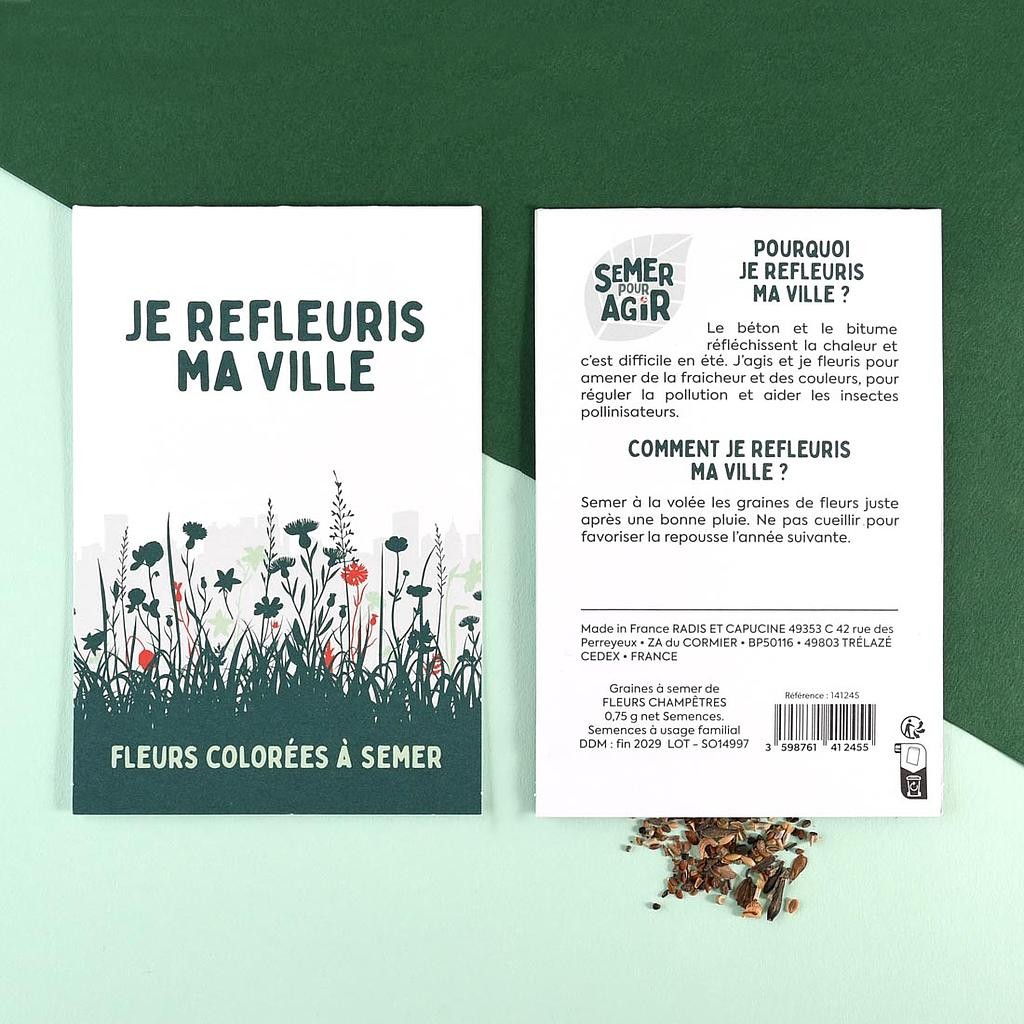
In France, 25,000 hectares are artificially created each year and 80% of the French live in urban areas. This artificialisation is growing 4 times faster than the population, and has direct impacts on the environment and quality of life. Concrete, bitumen and glazed surfaces reflect heat and city centres are becoming increasingly difficult to live in the summer. Citizens can act.
Act and flower to bring freshness and colour, regulate pollution and help pollinating insects.
When you return to green and flowery space on concrete, when you vegetate in wastelands and areas under construction, you bring well-being and actively participate in the landscaping of your neighborhood. Plant flowers as well to promote the biodiversity of pollinating insects, and to capture more rainwater.
- Promote a flowery urbanism: These bags of seeds encourage to rebloom the cities for more freshness, color, and to help pollinating insects.
- Pollution regulation: Annual and perennial flowers contribute to the regulation of air pollution, thus improving the quality of life in cities.
- Positive visual impact: Offering seeds to flower the city shows that your company cares about the urban environment and brings a positive visual impact.
- Committed gift: These seed bags are a symbol of commitment to a greener and more responsible urbanism, reinforcing the responsible image of your company.
- Support a French seed producer: By selecting this product, you are supporting a team involved in France in Angers, promoting national production.
-
Width :
8 cm
-
Height :
0 cm
-
Depth :
11 cm
-
Weight :
0.05 kg